Listen


 Facebook
 Nextdoor
 X
 WhatsApp
 Email
 Copy link

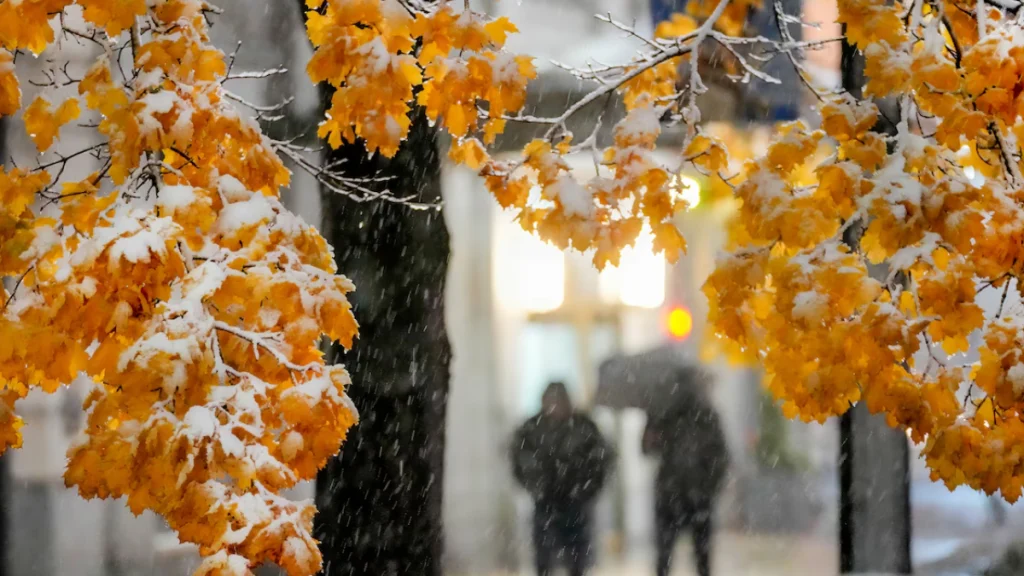
Snow is expected to fall across Salt Lake City and the Salt Lake Valley on Friday. Valley residents are likely to see a fair amount of snow, the National Weather Service said. Forecasters expect one to four inches during the day.
Meteorologist Julie Cunningham, with the National Weather Service, said Thursday afternoon that the storm is “minor.” She said it will still be noticeable in the valley floor and the surrounding mountains. The Salt Lake Tribune first reported these forecast details Thursday morning.
Sean P. Means wrote the original report for The Salt Lake Tribune. The report was published Thursday, Nov. 20, 2026, at 6 a.m.
Snow follows Thursday night rain
Cunningham said rain Thursday night will give way to a cold front moving through the valley. That front will cause the rain to taper off.
Snow will likely begin falling after the Friday morning commute, Cunningham said.
The Wasatch Mountains and the Wasatch Back will see heavier totals. Park City could get as much as eight inches, Cunningham said.
Drier weekend expected after the snow
Conditions should clear up once Friday’s snow passes, Cunningham said. A brief high pressure system will move through northern Utah, bringing partly cloudy skies Saturday and Sunday.
There is a slight chance of more snow Sunday night into Monday, Cunningham said.
A separate snowstorm hit the valley during Tuesday evening’s commute on Nov. 17, 2026, The Salt Lake Tribune reported. A photo from that storm showed snow falling in downtown Salt Lake City.
This prompted the Garland Fire Department to post a warning on Facebook. The post was a snarky reminder for drivers to stay careful in hazardous weather, The Salt Lake Tribune reported.
The Salt Lake Tribune reported that it read, “Snow is falling, and so are our expectations for Utah drivers. Prove us wrong. Please.”
Red Cross urges drivers to prepare
With Thanksgiving travel approaching next week, the American Red Cross’ Utah/Nevada offices sent out information Thursday. The information explains how to prepare for emergencies on the road, the Red Cross said.
The Red Cross recommends drivers keep emergency supplies on hand. Those include water, high-protein snacks, a first-aid kit and a flashlight, the Red Cross said.
Drivers should also carry extra batteries, jumper cables and a cellphone charger. They should bring a map and an emergency contact card too, the Red Cross said.
Drivers should also check their tires, battery, fluid levels and windshield wipers before heading out, the Red Cross said.